From the blog
Laser vs. Chemical Peel: Which Treatment Gets Better Results?
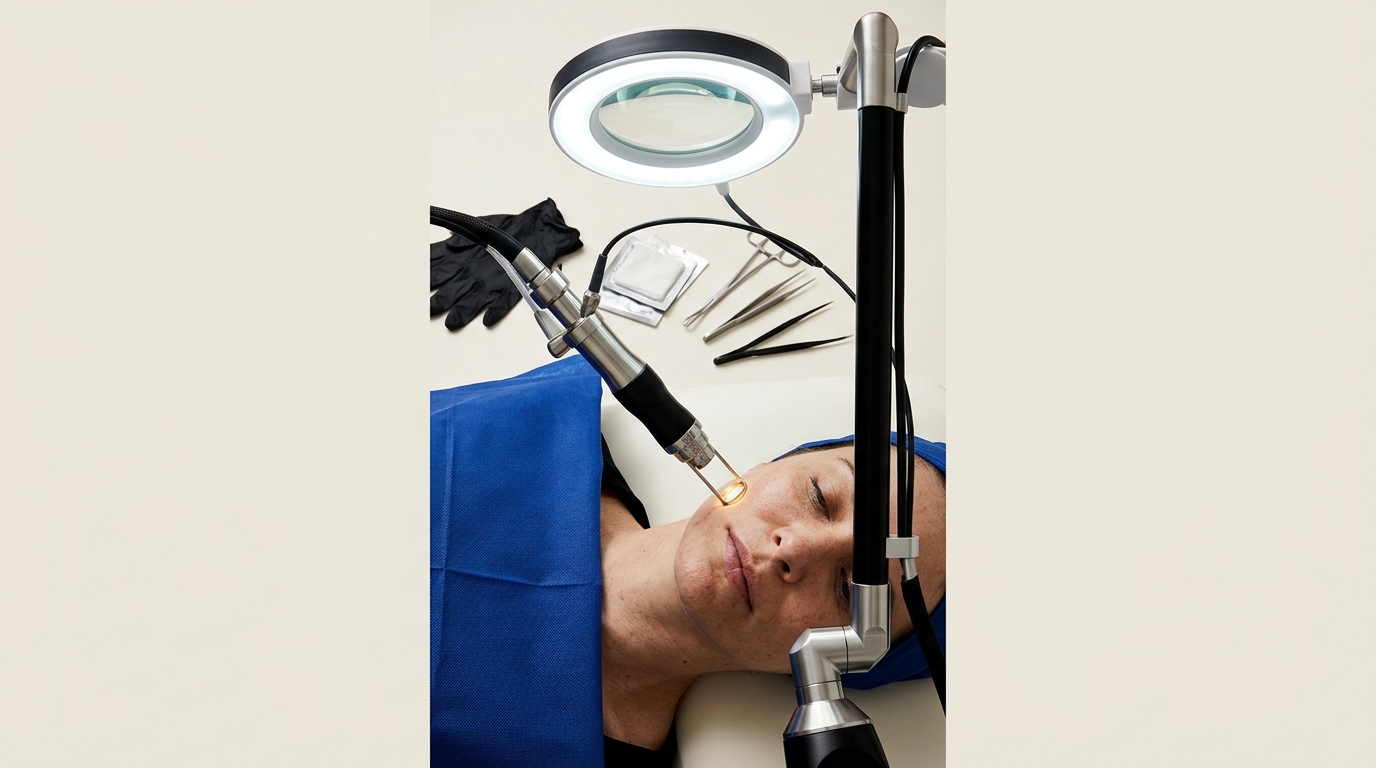
Laser resurfacing delivers more precise, measurable skin renewal than chemical peels for deep wrinkles, acne scars, and significant pigmentation - but chemical peels outperform lasers for cost efficiency, broader skin tone compatibility, and superficial texture refinement. The right choice depends on your skin concern, downtime tolerance, and budget.
Both treatments accelerate cell turnover and stimulate collagen, but they work through fundamentally different mechanisms. Lasers use concentrated light energy to ablate or heat targeted skin layers. Chemical peels use acids - glycolic, salicylic, trichloroacetic acid (TCA), or phenol - to chemically dissolve the outer skin layers. Understanding where each excels is the difference between achieving your goal in one session and spending months on the wrong treatment.
How Each Treatment Actually Works
Laser Resurfacing
Modern laser platforms - including the Fraxel Dual 1550/1927nm, CO2 fractional lasers, and Erbium:YAG systems - target water molecules in skin cells with pinpoint accuracy. Ablative lasers physically vaporize the top skin layers; non-ablative lasers heat deeper tissue without removing the surface. The thermal injury triggers a controlled wound-healing response, producing new collagen and elastin over 3–6 months post-treatment.
Chemical Peels
Chemical peels are stratified by depth: superficial (AHA/BHA acids at low concentrations), medium (TCA 20–35%, Jessner's solution), and deep (phenol-based, TCA above 40%). Each tier dissolves peptide bonds in skin cells, forcing accelerated exfoliation and dermis stimulation. A board-certified dermatologist calibrates peel depth by acid type, concentration, application time, and number of coats.
Head-to-Head Comparison: Laser vs. Chemical Peel
Factor Laser Resurfacing Chemical Peel Best for Deep wrinkles, acne scars, vascular lesions, precise skin resurfacing Uneven texture, mild pigmentation, acne, fine lines Depth of treatment Highly controlled - millimeter-precise Depth varies; harder to standardize across providers Downtime 3–14 days (non-ablative to fully ablative) 0–14 days (superficial to deep phenol peel) Average cost per session $1,000–$5,000+ $150–$3,000 Sessions typically needed 1–3 1–6 (depending on depth) Skin tone suitability Best for Fitzpatrick I–III; risk of hyperpigmentation on darker skin Medium peels work across Fitzpatrick I–V with proper prep Collagen stimulation Deep and sustained - results build over 6 months Moderate - primarily surface renewal Risk of scarring Low with skilled provider; higher with aggressive ablative settings Low for superficial/medium; elevated for deep phenol peels Pain level Moderate–high (topical or local anesthesia used) Mild (superficial) to moderate (medium/deep) Results longevity 3–5 years with maintenance 1–2 years (medium); longer for deep peelsWhen Laser Resurfacing Wins
Acne scars and deep wrinkles respond significantly better to fractional CO2 or Erbium laser. A 2024 clinical review published in the Journal of Cosmetic Dermatology found fractional CO2 laser produced a 50–75% improvement in atrophic acne scars after two sessions, compared to 20–35% improvement with medium-depth TCA peels. The laser's ability to target specific skin depths without affecting surrounding tissue makes it superior for structural skin correction.
Vascular and pigmented lesions- rosacea-related redness, port wine stains, melasma - respond to targeted wavelengths that chemical acids simply cannot replicate. The Nd:YAG 1064nm and pulsed dye laser (PDL) address hemoglobin directly. No acid does that.
Skin tightening is a laser-specific advantage. Non-ablative devices like Thermage FLX and Clear + Brilliant heat the dermis to contract existing collagen fibers - a mechanism chemical peels cannot achieve.
When Chemical Peels Win
Acne and oily skin respond exceptionally well to salicylic acid peels (20–30%), which are lipid-soluble and penetrate directly into pores. Chemical peels clear active breakouts, reduce sebaceous activity, and improve post-inflammatory hyperpigmentation faster than most laser options for this indication.
Broader skin tone applicability gives chemical peels an edge. Darker skin tones (Fitzpatrick IV–VI) carry elevated risk of post-inflammatory hyperpigmentation with ablative lasers. A dermatologist-supervised TCA peel at 20–25% with proper pre-treatment priming using hydroquinone or azelaic acid is routinely safer and more effective for these patients.
Cost and accessibility are decisive for many patients. A series of six superficial glycolic peels addressing texture and early signs of aging costs a fraction of a single Fraxel session - and can be maintained long-term without requiring clinical-grade technology at every appointment.
Can You Combine Both Treatments?
Yes - and combining them often produces superior outcomes. Many board-certified dermatologists and plastic surgeons use a light chemical peel to prep skin 4–6 weeks before laser resurfacing, evening out surface irregularities so the laser energy distributes more uniformly. Post-laser, superficial peels at 6–12 month intervals maintain results and extend the collagen-stimulation window. Always confirm timing with your provider; performing a peel too close to a laser session increases complication risk significantly.
The Provider Quality Factor
Neither treatment is more dangerous than the other in the right hands - but both carry real risks when performed incorrectly. Scarring, hyperpigmentation, infection, and prolonged erythema are documented complications of both lasers and deep peels when administered by undertrained technicians. Choose a board-certified dermatologist or plastic surgeon with documented experience in your specific skin type and concern. Medspa technicians operating laser equipment without physician oversight represent a genuine risk category, particularly for aggressive resurfacing.
The Bottom Line
For significant structural concerns - deep scarring, pronounced wrinkles, skin laxity- laser resurfacing delivers measurably stronger results. For active acne, superficial texture issues, and patients with medium-to-dark skin tones, chemical peels are safer, more affordable, and equally effective. The most sophisticated approach uses both strategically, guided by a dermatologist with a clear treatment plan tied to your specific goals.
Laser Vs Chemical Peel FAQ
Which treatment has less downtime - laser or chemical peel?
At equivalent depths, downtime is comparable. A superficial chemical peel causes 0–2 days of mild flaking; a non-ablative laser like Clear + Brilliant causes 2–3 days of redness. A deep phenol peel and a fully ablative CO2 laser both require 10–14 days of social downtime, plus 4–6 weeks of redness. Peel depth and laser aggressiveness matter more than the modality itself.
Is laser or chemical peel better for dark skin tones?
Chemical peels are generally safer for Fitzpatrick IV–VI skin tones. Medium-depth TCA peels with physician-supervised pre-treatment (hydroquinone 4–8 weeks prior) carry lower risk of post-inflammatory hyperpigmentation than ablative lasers. Non-ablative lasers like Nd:YAG 1064nm are the exception - this wavelength is specifically designed to be safer on darker skin.
How long do results from each treatment last?
Fractional CO2 laser results typically last 3–5 years with proper sun protection and a maintenance skincare routine. Medium-depth TCA peel results last 1–2 years. A single deep phenol peel can produce results lasting 5–10 years, though it carries the highest risk profile and requires cardiac monitoring during application. Annual superficial peel series can maintain results indefinitely.
Which is better for acne scars specifically?
Fractional CO2 and Erbium:YAG lasers are the clinical gold standard for atrophic (depressed) acne scars. They remodel the dermis at depth, producing 50–75% improvement over two sessions for most patients. Chemical peels address post-inflammatory hyperpigmentation from acne effectively, but they cannot structurally remodel depressed scar tissue the way laser energy can.
Can laser and chemical peel treatments be done at the same time?
No - not simultaneously. Performing both on the same day compounds skin trauma and dramatically increases complication risk, including scarring and infection. A sequenced protocol - chemical peel 4–6 weeks before laser, or superficial peels 3–6 months after laser - is the evidence-supported approach. Your dermatologist should coordinate the timing based on your skin's healing response.


